
When it comes to baked goods that really hit the spot, it’s hard to beat the satisfaction of a fresh cocktail bun. These little treasures from Chinese bakeries have become such a beloved treat everywhere, and for good reason—they have that perfect balance of sweetness, soft texture, and just a bit of cultural charm.
As I dive into making these, I can’t help but think back to my childhood. These pastries were always so much more than just a treat for me; they were a cherished favourite and a weekly tradition for my family. There’s just something about that nostalgic flavour that brings back so many good memories.
The Origins of Cocktail Buns
Cocktail buns—or gai mei bao as we call them in Cantonese—have such deep roots in Chinese culture. They originally gained popularity in Hong Kong bakeries back in the mid-20th century and have since become a total favourite all over the world.
If you’ve never had one, they’re made of a super soft, slightly sweet bread dough wrapped around a buttery coconut filling. That filling is a mix of shredded coconut, sugar, butter, and sometimes a bit of custard powder, creating this amazing contrast of textures inside the bun. They were a staple in local bakeries and dim sum spots, usually enjoyed as a quick snack or paired with a warm cup of tea.
The name “cocktail bun” is actually a bit funny—it’s said to come from the shape, which supposedly resembles a cocktail glass with its topping. But don’t worry, there’s no actual alcohol in them! They’re strictly about that sweet, coconut-filled centre.
As Chinese food has spread globally, these buns have definitely come along for the ride. They’ve even evolved a bit over time, with some regional versions adding things like sesame seeds, red bean paste, or even chocolate to switch things up. But for me, nothing beats that classic coconut flavour that reminds me of home.
What makes cocktail buns so irresistible is their perfect blend of flavours and the way they bring back joyful, nostalgic memories—especially from my childhood. Today, they’re still a beloved treat in bakeries, homes, and cafés around the world, offering a delicious mix of Chinese culinary tradition and global love for baked goods.


Creating Family Traditions
When I first introduced my boys to making cocktail buns, I didn’t expect it to become such an amazing bonding experience. From the excitement of gathering the ingredients to the laughter-filled moments of kneading the dough, every step has been a blast. Seeing their faces light up while we mix the coconut filling or shape the buns brings me so much incredible joy.
The boys are totally into the whole process. They jumped in at every stage—rolling out the dough and packing each bun with that yummy filling. The kitchen basically turned into our little playground, filled with that irresistible smell of baking bread and the genuine excitement of tasting our own homemade treats.
As the buns bake to that perfect golden colour, the kitchen gets so warm—not just from the oven, but from all the energy buzzing around us. When we finally sit down to try them, the smiles on their faces say it all.
Even though I didn’t get to make these with my own parents, I’m determined to start this tradition with my kids, hoping they’ll carry it on with their own families someday. It’s about so much more than just baking; it’s about creating memories, sparking a love for real food, and deepening our family bond. Making these together is officially one of our favourite family traditions now—it’s pure “Salt & Soul” in action.


Cocktail Buns (雞尾包)
Ingredients
Tang Zhong
- 35 g bread flour
- 155 g milk
Milk Bread
- 365 g bread flour
- 3 g salt
- 55 g sugar
- 6 g instant yeast
- 1 large egg
- 140 g whole milk
- 45 g butter (room temperature)
Coconut Filling
- 100 g butter, softened
- 2 tbsp powdered sugar
- 2-3 tbsp flour
- 40 g unsweetened shredded coconut flakes
- 25 g custard powder
- 1/4 tsp salt
Topping
- 50 g butter (melted)
- 25 g cake flour
- 15 g powdered sugar
Egg Wash
- 1 egg
- 1 tbsp milk
Instructions
Tang Zhong
- In a small saucepan, whisk together 35g of bread flour and 170g of milk until smooth.
- Cook the mixture over low-medium heat, stirring continuously, until it thickens into a paste (resembling a roux). Remove from heat and let it cool.
Milk Bread
- Combine lukewarm milk with yeast and a small amount of sugar, allowing it to rest for approximately 5 minutes. For Thermomix users, pour in milk, yeast, and a pinch of sugar, then set the machine for 2 minutes at 37 degrees, operating at speed 1 to activate yeast.
- Once the milk and yeast mixture is ready, combine bread flour, salt, sugar in stand up mixer (with dough hook). Start mixing at a low speed for about 2 minutes while adding in the milk mixture. As you increase the speed to medium, add in the tang Zhong and continue kneading.If you're using a Thermomix, incorporate bread flour, salt, sugar, egg, and tang zhong into the milk mixture, then initiate the kneading process for 3 minutes or until dough is smooth and elastic.
- Slowly add butter to the dough and continue kneading for around 8-10 minutes or until the dough is smooth and elastic. Cover the bowl with a damp cloth and let the dough rise in a warm place until it doubles in size.
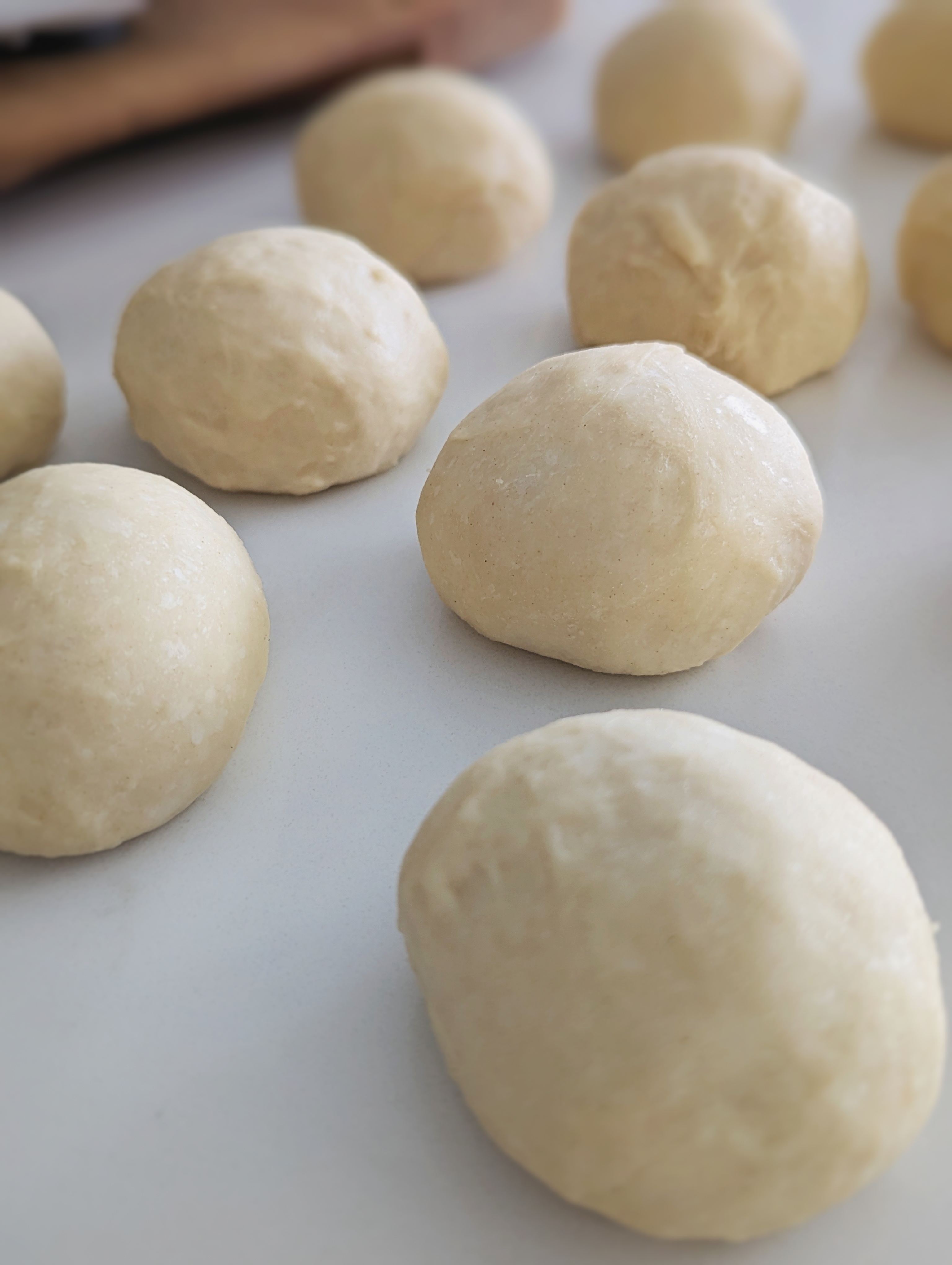
- After the initial proofing of the dough, portion it into 12 equal parts. I typically weigh the total dough and then divide it by 12 to approximate the size of each bun.
Filling
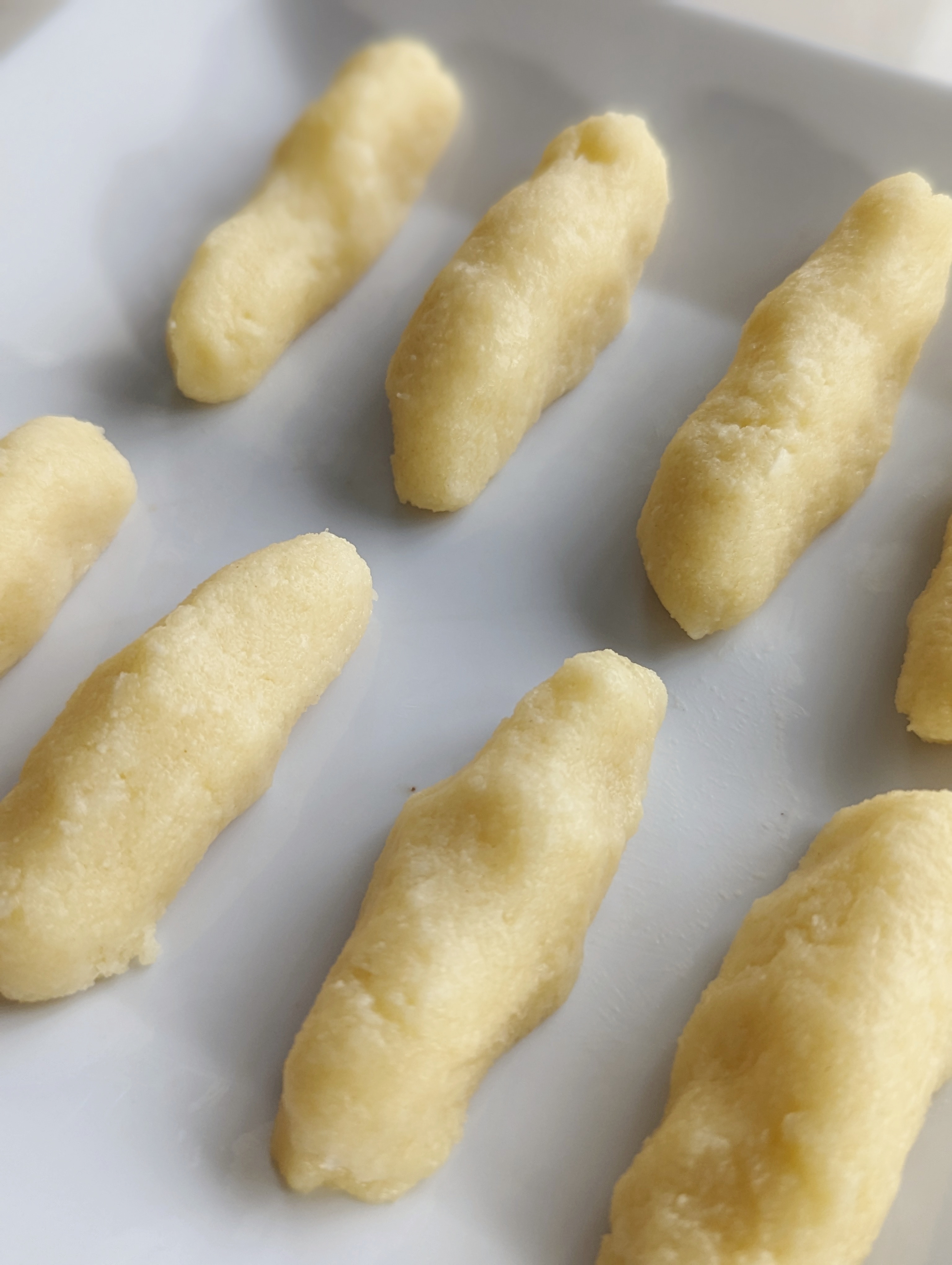
- While the dough is proofing, start preparing the filling by combining all the ingredients and shaping them into log-sized pieces, approximately 7cm in length, for each bun. If the mixture is too soft to manage, you can refrigerate it for approximately 5 minutes to allow it to firm up and become more manageable.
Assembling the Buns
- Roll out each portion into a rectangle and place a log shaped piece of the coconut filling in the centre.
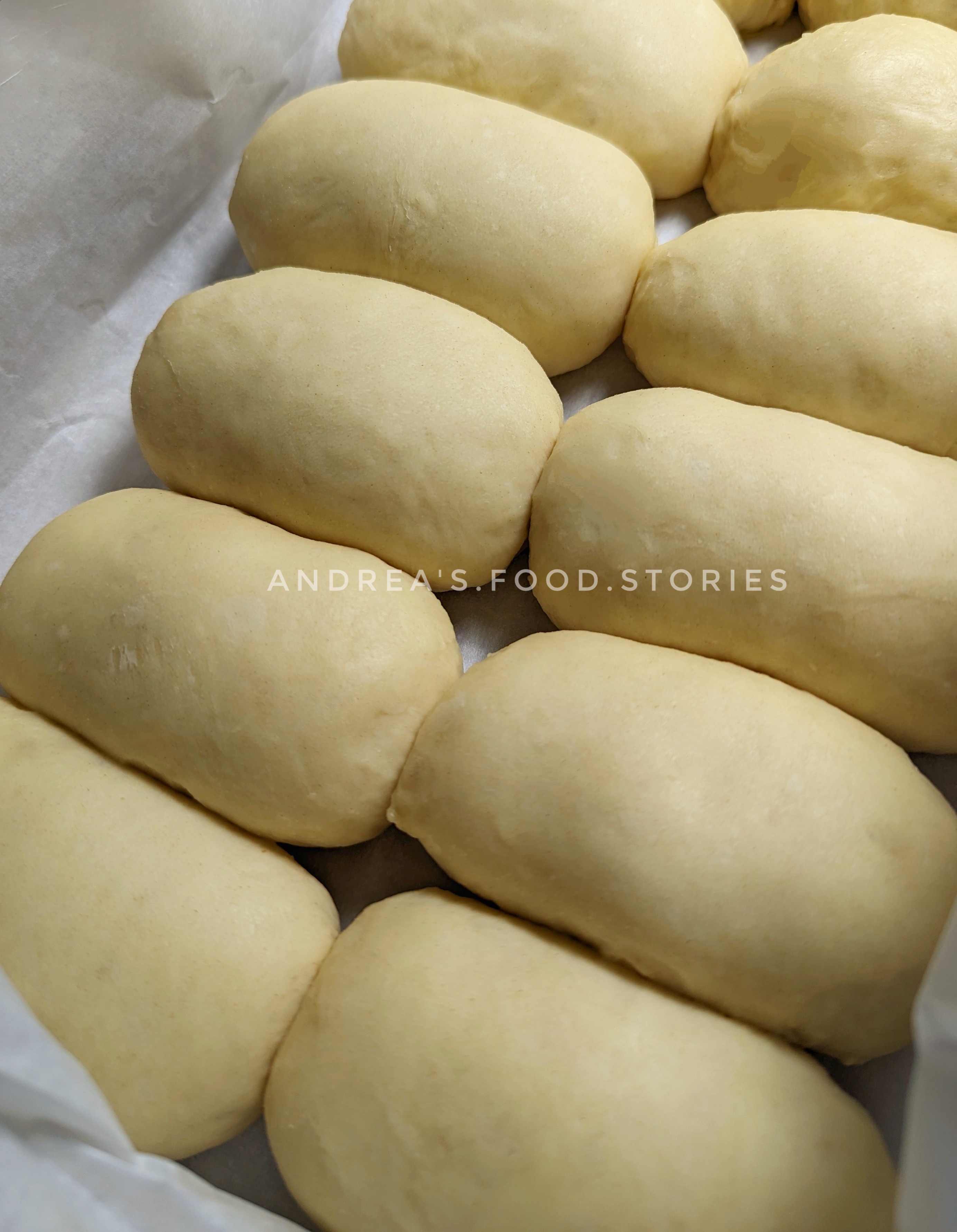
- Fold the dough edges over the filling, pinching them to seal and creating a rectangular bun shape.
- Place the filled buns on a baking sheet lined with parchment paper, leaving some space between each.
- Allow the buns to rise for an additional 30.
- After their second proofing, apply a layer of egg wash to each bun and then add the topping, finishing by sprinkling toasted white sesame seeds over each one.
Topping
- Combine ingredients together and transfer the mixture into a piping bag for piping over the buns.
Egg Wash
- Brush a layer of the wash over each bun. This enhances the appearance of the buns, giving them a glossy, golden finish.