There’s a particular kind of tired that doesn’t go away with a good night’s sleep. You rest, but you don’t actually recover. You’re functioning, technically, but something underneath feels dry and depleted, like you’ve been drawing from a well that nobody’s been refilling. I’ve been feeling like that for years, and it’s what the first thing I hear from any TCM doctors I’ve seen.
This is something I’ve personally struggled with for years, and for me, it has also seemed to affect my TN pain. When my body feels run down, depleted, or stretched too thin for too long, I notice that everything feels more sensitive.
Over the years, I started to notice that when I overdo it, even with things that used to feel manageable, I feel it right away. There’s this immediate sense of exhaustion and dryness in my body, like my reserves are already low and I’ve just pushed past the edge. It’s really hard to explain, but I’m sure there are many women out there that know this feeling and can’t quite name it either.
Western medicine might call it burnout, adrenal fatigue, hormonal imbalance, perimenopause, or anxiety, and it could overlap with any of those experiences. But Traditional Chinese Medicine has been describing this kind of depleted state for over two thousand years, and it has a name: Yin deficiency.
It’s one of the common patterns TCM practitioners look at in women, especially with how modern life tends to run. Once you start to understand what yin represents, and what gradually uses it up over time, a lot of things begin to make sense.
So What Actually Is Yin?
In Traditional Chinese Medicine, the body runs on a balance between two complementary forces: Yin and Yang. Yang is the active, warm, moving, outward energy. It’s the fuel behind doing, pushing, driving, producing. It’s the fire. Yin is the opposite. It’s the cooling, moistening, nourishing, resting energy. It’s the water. It’s the substance that keeps the body hydrated, the mind calm, the tissues supple, the temperature regulated. It’s what gives you the capacity to be still, to recover, and to feel grounded.
Think of it this way: Yang is the flame. Yin is what keeps the flame from burning the whole house down.
In TCM, yin is often associated with the body’s nourishing and moistening aspects, including fluids, blood, and restorative reserves. When there’s enough yin, things tend to feel more balanced. Sleep can feel more restful, the body regulates temperature more easily, and recovery feels a bit smoother.
The thing about yin is that it tends to decline with age. That’s a natural part of how the body changes over time. Lifestyle plays a role in how that balance holds up. With the pace of modern life, it’s easy to run a bit low without really noticing it.
Why Women Are Especially Vulnerable to This
This is where it gets really relevant. TCM has long recognized that women lose yin at a faster rate than men.
Women menstruate. Women get pregnant. Women breastfeed. Women go through perimenopause and menopause. Every single one of those processes draws on Yin.
“Women are all about fluids. Men don’t menstruate, lactate or grow babies inside of them. Men for the most part hold on to their liquids much better than women.” — TCM acupuncturist, Window of Heaven Acupuncture
When I started learning more about this, it helped me make sense of a lot of what women go through, and I can see it more clearly now. Each menstrual cycle uses blood and fluids, both considered yin in TCM. Pregnancy draws heavily on the body’s reserves to build and sustain another life. Breastfeeding uses up fluids on an ongoing basis. And menopause, in TCM terms, reflects a gradual decline in yin over time, which is why symptoms like hot flashes, night sweats, sleep changes, dryness, and irritability often show up during that stage. All classic signs of yin deficiency.
Your body doesn’t have enough yin left to keep the heat under control, and when you look at it that way, it’s kind of like… we’re constantly drawing from the same reserve. It’s not that surprising that things can start to feel low over time. And then on top of that, modern life brings in another layer that isn’t about biology at all. Stress.
A study published in PMC on middle-aged Taiwanese women found that 21.7% had a yin-deficiency constitution — making it one of the three most common imbalances in that age group. And women younger than 56 were at higher risk than older women, suggesting it’s building well before menopause even begins. (PMC, 2020)
What’s Draining Your Yin
Most of what depletes yin is just… how most of us are living.
Chronic overwork and not enough rest
This is the big one. In TCM, yin is replenished during rest, especially during deep sleep and real downtime. When you consistently work long hours, stay up late, push through fatigue, or keep every moment filled, your body uses more than it can restore. Over time, that gap grows, and you end up relying on reserves that are already low.
Poor or insufficient sleep
In TCM, the hours between 11 pm and 3 am are linked to the Gallbladder and Liver channels. These are the times when the body is most actively replenishing blood and yin. Sleeping through those hours matters if you’re trying to maintain or rebuild yin. Going to bed late on a regular basis, even if you sleep in, means missing the most restorative window of the night.
Chronic stress and emotional intensity
Prolonged emotional stress, anxiety, worry, overthinking, staying in a constant state of alertness, uses up yin over time. In TCM, each emotion is linked to an organ system, and ongoing emotional load places strain on those systems and gradually depletes their yin. That constant mental activity many women notice, the feeling of not being able to switch off even when you’re exhausted, is both a sign of this pattern and something that continues to add to it.
Diet that generates heat
Excess spicy food, fried food, alcohol, and stimulants like coffee all generate internal heat in TCM terms. Heat uses up fluids, and fluids are part of yin. So a diet that leans heavily on these foods, especially alongside stress and lack of rest, can gradually lower your reserves over time. Alcohol in particular is seen as more taxing, because it’s both warming and places extra strain on the liver in TCM.
Very restrictive or low-fat diets can also work against you. Yin needs enough nourishment to rebuild, and without that, it becomes harder for the body to keep up.
Pregnancy, birth, and breastfeeding without adequate recovery
These are all significant draws on yin, and they’re meant to be. The body is doing a lot during those times, and it makes sense that it uses more. What tends to be more challenging is how little space there is for recovery in modern life. Getting back to work quickly, not sleeping enough, taking care of everyone else first, not being properly nourished, it can all add up. Over time, it can leave you feeling like you’re running low, and that’s not always something that rebuilds quickly. And for a long time, that was me.
Aging, especially from the late 30s onward
TCM has long acknowledged that yin naturally declines with age. Classical texts describe kidney essence gradually diminishing over time, with yin reserves becoming more noticeably reduced by middle age.
Zhu Danxi, a physician from the Jin-Yuan dynasty in the 1300s, wrote, “Yin is ever deficient and Yang is ever in excess in the human body.” It reflects the idea that maintaining yin is an ongoing process, not something that stays constant on its own.
Signs Your Yin Is Running Low
Some of these will feel very familiar.
- Night sweats like waking up hot or damp when the room isn’t warm
- Hot palms, hot soles, or a sensation of heat in the chest at night (TCM calls this “five-center heat”)
- Dry mouth, especially at night, or constantly feeling thirsty
- Dry eyes, skin, hair, or a sense of dryness throughout the body
- Difficulty falling asleep or staying asleep, with a mind that won’t stop
- A low-grade restlessness or inner agitation, wired but tired
- Irritability or a short fuse, especially in the evening
- Dizziness or ringing in the ears
- Lower back soreness or weakness that doesn’t have a structural cause
- Flushed cheeks, especially in the afternoon
- A feeling of never being fully rested no matter how much you sleep
- Menstrual cycles that are getting shorter or lighter, or periods that have become irregular
Not everyone will experience all of these, but if several feel familiar, yin deficiency is something to look at more closely.
When yin becomes too low, yang, the more active and warming side, becomes relatively stronger. The result is what TCM refers to as “empty heat,” a state of internal dryness and heat that isn’t coming from excess, but from a lack of balance. It’s not that there’s too much heat. It’s that you don’t have enough of what’s supposed to cool it down.
Yin Is Not Easy To Replenish
In TCM, yin is the deepest, most substantial resource in the body. It’s not like qi or yang, which respond relatively quickly to treatment and lifestyle changes. Yin is slow to build. It takes time, consistency, and actual downtime to restore. And the pace at which modern life depletes it is often faster than normal living can replenish it.
“Yin is usually depleted over a long period of time and, likewise, it takes some time to recover it. Yin-deficient women trying to conceive may be looking at 6 to 12 months of building their kidney yin again with tonic herbs and a sensibly paced life.” — Jane Lyttleton, Treatment of Infertility with Chinese Medicine (ScienceDirect
And that’s for women who are actively treating it. For most people just living their regular lives, it tends to build quietly over time. Looking back, I can see this in my own experience too. After my first pregnancy, I didn’t really give myself the time to recover or replenish the way my TCM doctor had suggested. I went right back into everything, and then became pregnant again not long after. After that, I started noticing my health shifting in ways I couldn’t fully explain at the time.
Here’s something an acupuncturist wrote that is one of the most honest descriptions of yin restoration I’ve come across (and it’s always stuck with me):
“The fastest way to nourish the yin would be to go on a month-long vacation somewhere quiet and read books all day. On that vacation one would need to sleep deeply between 8pm and 6am every night. After about a month of this level of rest, the yin would start to show significant improvement. Surprisingly enough, most of my patients are not interested in this very simple and inexpensive healing technique.” — TCM Acupuncturist, Window of Heaven Acupuncture
A full month of deep rest, sleeping from 8 pm to 6 am, spending the day reading quietly, just to start noticing real improvement. And honestly, most of us would say yes to that if it were realistic. I’m not talking about a spa weekend, or a nice long, relaxing bath. This is a complete withdrawal from output and stimulation for thirty days straight, and most people can’t do that. Which means most people are living with an ongoing yin deficit that compounds quietly over years. You push through. You caffeinate. You manage. You stay up too late. You don’t take real time off, and slowly, the well gets lower and lower without you really noticing because you’ve adapted to operating from that depleted place. It just starts to feel like who you are.
This is why TCM practitioners often say kidney yin patterns can take longer to support than kidney yang patterns, especially in women over 35. You can warm yang relatively quickly. You cannot quickly rebuild what has been depleted over years of overwork, disrupted sleep, stress, and the physical demands of being a woman.
What Actually Helps
With that in mind, here are a few things that can help. None of it is quick, but it’s also not complicated, it just comes down to consistency.
Sleep. Real sleep. Early sleep.
Getting to bed before 11 pm as often as possible is one of the most impactful shifts you can make. I personally aim to be in bed by 10 pm most nights. In TCM, the liver and gallbladder channels, linked to blood and yin replenishment, are most active between 11 pm and 3 am. If you’re awake during those hours, you miss a key restorative window. It doesn’t mean waking up at 6 am is a problem. It means going to bed earlier tends to matter more than sleeping in.
Genuine rest during the day
Not scrolling. Not podcasts. Not turning it into another form of productivity. Actual stillness. Even 15 to 20 minutes of lying down, sitting quietly, or a short nap, the kind where you close your eyes and let your nervous system settle, adds up over time and supports yin.
In TCM terms, rest is the primary way yin rebuilds itself. The body can’t replenish what it’s always being asked to spend. My TCM doctor has also suggested that I listen to light, gentle music, like “spa‑like” music, between 9 p.m. and 11 p.m. as part of unwinding and helping my nervous system slow down.
Movement that doesn’t deplete
High-intensity exercise is yang-heavy. It burns, pushes, depletes fluids through sweat. For someone with significant yin deficiency, excessive cardio, HIIT, or sweating-heavy workouts can make the depletion worse. I’m not saying don’t move. I’m saying the type of movement matters.
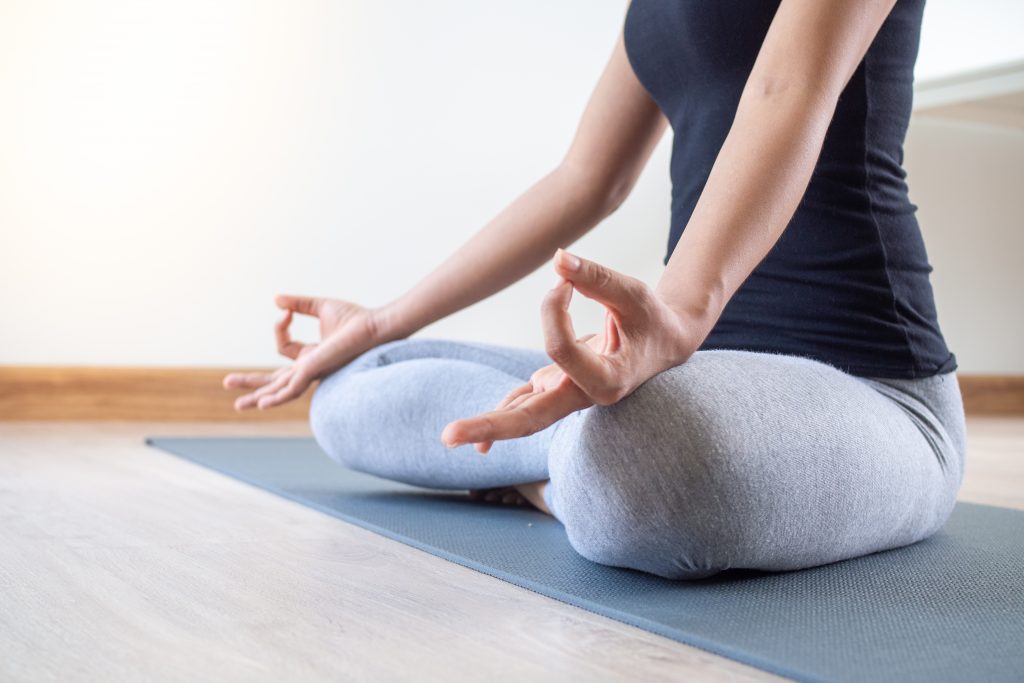
Things like tai chi, qigong, restorative yoga, gentle walks, and slow swimming are all more yin-supportive forms of movement. They keep the body active without using up your reserves as quickly. I can do yoga, but I’m not running a marathon, and there’s a reason for that.
Eat foods that nourish yin
In TCM food therapy, yin-nourishing foods are generally moist, cooling, and dark in colour. Things like:
- Black sesame seeds and black beans
- Bone broth and soups — particularly with collagen-rich bones
- Goji berries, mulberries, and dark berries
- Pears, watermelon, cucumber, and other high-water-content foods
- Eggs, oysters, and mussels
- Millet
- Tofu, kidney beans, mung beans
- Seaweed and kelp
- Sweet potato and yam
And reduce what depletes it: alcohol, coffee, spicy food, fried and ultra-processed food, and chronically restrictive eating.
Chinese herbal medicine
This is often one of the more direct ways to support rebuilding yin, beyond diet and rest alone. Herbs like Rehmannia (Shu Di Huang), goji berry, Ophiopogon (Mai Men Dong), and lily bulb (Bai He) are commonly used in yin-supportive formulas. A qualified TCM practitioner can tailor a formula to your specific pattern, rather than using a one-size approach, and that tends to make a noticeable difference.
Acupuncture
Acupuncture doesn’t add yin out of nowhere, but it helps the body use what it has more efficiently. Regular treatments over time, combined with lifestyle changes, can meaningfully support recovery.
Stress reduction
Ongoing mental and emotional stress can be one of those quiet drains on yin. Also things like overthinking, always being “on,” always available, and never really switching off. In TCM, that kind of activity is often seen as more yang in nature, and over time it can start to wear on yin. That was me for many years! Practices that help the body settle like slow breathing, quiet time, or simply stepping away from constant input, can make a difference here.
Why This All Matters So Much Around Perimenopause
If you’ve been depleting your yin for years through overwork, poor sleep, stress, multiple pregnancies, never really recovering properly, and then you hit perimenopause, your reserves are already significantly low. The natural decline in yin that comes with aging hits harder because there wasn’t much buffer left to work with.
This is why some women sail through menopause with minimal symptoms while others are hit with intense hot flashes, severe insomnia, anxiety, brain fog, mood swings, and a complete loss of feeling like themselves. The difference often comes down to how depleted their yin was going into it.
In TCM, menopause is understood as the culmination of a lifetime of gradually declining kidney essence. If yin declines faster than yang, the result is symptoms of excess activity — hot flushes, palpitations, insomnia, dryness, and forgetfulness. Kidney yin deficiency is considered ‘always at the root’ of menopausal problems in TCM. (PMC: Traditional Chinese Medicine and Menopause, 2008)
I know all this might sound overwhelming, and it isn’t meant to. It’s a reminder that supporting yin isn’t something you only think about once things start to feel off. It’s something you can pay attention to gradually, through your 30s, your 40s, and beyond. Because the way you live now plays a role in how your body feels later on.
Simply Salt & Soul
Yin isn’t as abstract as it sounds. It shows up in real, physical ways. You can think of it as your body’s deeper reserves, fluids, nourishment, and that steady, restorative capacity. For a lot of women, it’s something that can gradually run low over time without being obvious at first.
The signs are there, dry skin, night sweats, sleep that doesn’t feel restorative, that constant restless tired, the sense of running on fumes. It’s easy to chalk these up to being busy, getting older, or just life. And yes, some of that is part of it. But some of it comes back to a resource that’s been gradually used up while you kept going, without enough time or space to build it back.
The hard truth I learned is that yin takes time to deplete, and it takes time to rebuild. There isn’t a quick fix. But there are real ways to support it, going to bed earlier, resting in a more genuine way, choosing foods that nourish instead of drain, moving in ways that don’t use up your reserves, working with herbs and acupuncture, and treating stillness as something important, not optional.
You can’t go on a month-long retreat to read and sleep for twelve hours a night. Most of us can’t. But you can start building small, consistent yin-preserving habits now. Given how long it takes to replenish this stuff, now is always the right time to start.
This post is for educational and informational purposes only and is not medical or treatment advice. Individual needs vary, especially when it comes to yin, yang, and TCM patterns. If you have concerns about your health, fatigue, or how your body is holding its reserves, please speak with a licensed TCM doctor or other qualified healthcare professional before making changes to your rest, movement, or diet.
Sources:
PMC: TCM Constitutions in Middle-Aged Women, Taiwan Biobank (2020)
PMC: Traditional Chinese Medicine and Menopause (2008)
Frontiers in Cellular and Infection Microbiology: Yin Deficiency and Premature Aging in Women (2024)
Window of Heaven Acupuncture: Nourish the Yin
ScienceDirect: Yin Deficiency Overview
Me & Qi: Yin Deficiency Pattern