“If your mind won’t slow down… it might not be anxiety in your head—it might be your body asking for support.”
You know that feeling. You’re finally sitting down at the end of the day, maybe even lying in bed, and instead of settling… your mind speeds up.
You replay conversations.
You think about tomorrow.
You start solving problems that don’t even exist yet, and at some point, you wonder:
Why can’t I just relax?
But what if this isn’t something to fight?
What if it’s something to understand?
What’s Actually Happening in the Body
From a physiological perspective, anxiety is often connected to how the nervous system is functioning.
Your body is designed to move between two states:
- Alert (“fight or flight”)
- Calm (“rest and digest”)
But when you’re under ongoing stress, not sleeping well, or feeling depleted, your system can get stuck in that more alert, reactive state. This can show up as: racing or looping thoughts, difficulty falling or staying asleep, tension in the body (shoulders, chest, jaw) or feeling “tired but wired.” Sometimes it’s a sense of being on edge for no clear reason.
So when your mind won’t slow down, it’s not random—it’s often your body trying to keep up with everything it’s been carrying.
A Different Perspective: How TCM Sees Anxiety
Traditional Chinese Medicine (TCM) looks at the body and mind as deeply connected. Instead of separating emotions from physical health, it asks: What patterns in the body might be contributing to how you feel? In this system, anxiety isn’t just one thing—it can show up in different ways depending on what’s going on internally.
Common TCM Patterns Behind Anxiety
Heart & Spleen Imbalance (Overthinking + Depletion):
This pattern is often linked to worry, overthinking, and mental fatigue. It can develop when the body isn’t being consistently nourished—through irregular eating, ongoing stress, or simply doing too much for too long.
You might notice:
- Racing thoughts, especially at night
- Trouble falling or staying asleep
- Feeling mentally exhausted but unable to switch off
- Low energy or fatigue
- Bloating or digestive discomfort
- This is that feeling of being completely drained—but still “on.”
Liver Qi Stagnation (Stress + Emotional Tension)
This pattern is associated with stress that feels stuck in the body.
When emotions or tension build up without release, it can create a sense of internal pressure.
You might notice:
- Irritability or mood swings
- Tightness in the chest, neck, or shoulders
- Feeling easily overwhelmed
- Sighing often or needing a deep breath
- Digestive changes when stressed
- This is often that pent-up, can’t-quite-relax kind of feeling.
Heart & Kidney Imbalance (Deeper Exhaustion)
In TCM, the Kidneys help anchor and support the Heart. When this system feels depleted—often from long-term stress or lack of rest—the mind may feel less grounded.
You might notice:
- Feeling physically and mentally drained
- Restless or lighter sleep
- Waking during the night
- A sense of uneasiness or internal restlessness
- Lower resilience to stress
- This is more of that deep, worn-out but unsettled state.
Why Anxiety Can Feel So Different From Person to Person
One of the most important things to understand is this: not all anxiety feels the same—because it doesn’t come from the same place. For some, it’s a restless mind that won’t turn off and for others, it’s constant overthinking and worry and for some, it’s physical tension that builds and doesn’t release. From a TCM perspective, this is why support is never one-size-fits-all. It’s about understanding what your body is expressing.
How Acupuncture May Support the Body
Acupuncture is one of the tools used in TCM to help bring the body back into balance.
From a TCM perspective, it may help:
- Support the smooth flow of Qi (energy)
- Bring balance to the Heart, Liver, and Spleen systems
- Encourage a more settled internal state
From a modern perspective, acupuncture has been explored for its ability to:
- Support the nervous system in shifting toward a more relaxed state
- Encourage the release of calming chemicals like endorphins
- Help move the body out of a constant “fight or flight” response
Many people describe feeling more grounded, more relaxed and more able to rest after a session.
Simple Ways to Support Your Body Daily
You don’t have to overhaul your life to begin supporting your system. Often, it’s the small, consistent things that make the biggest difference like eat regularly to support steady energy and reduce internal stress, create small routines to reduce mental load, or move your body gently (walking, stretching) to release tension. Build in pauses throughout the day, even if it’s just a few minutes, or wind down at night instead of going straight from busy to bed.
These may seem simple, but they help signal safety to your body—and that’s where regulation begins.
Acupressure Points to Support a Calmer State
One simple way to support your body in the moment is through gentle acupressure. While acupuncture is done by a trained practitioner, acupressure is something you can do yourself—whether you’re feeling overwhelmed, having trouble winding down, or just need a moment to reset.
You can apply firm but comfortable pressure for about 30–60 seconds, breathing slowly as you hold each point.
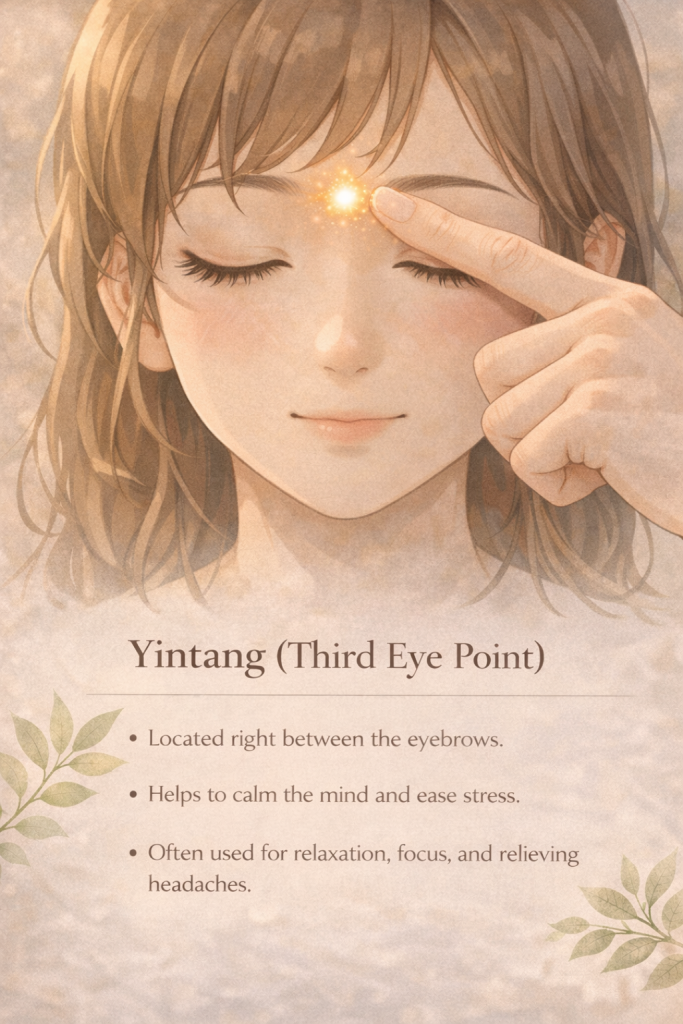
Yintang (Third Eye Point)
Between the eyebrows. It is often used to help quiet the mind. It can support moments of overthinking or mental tension. A nice one to use before bed or when your thoughts feel busy.
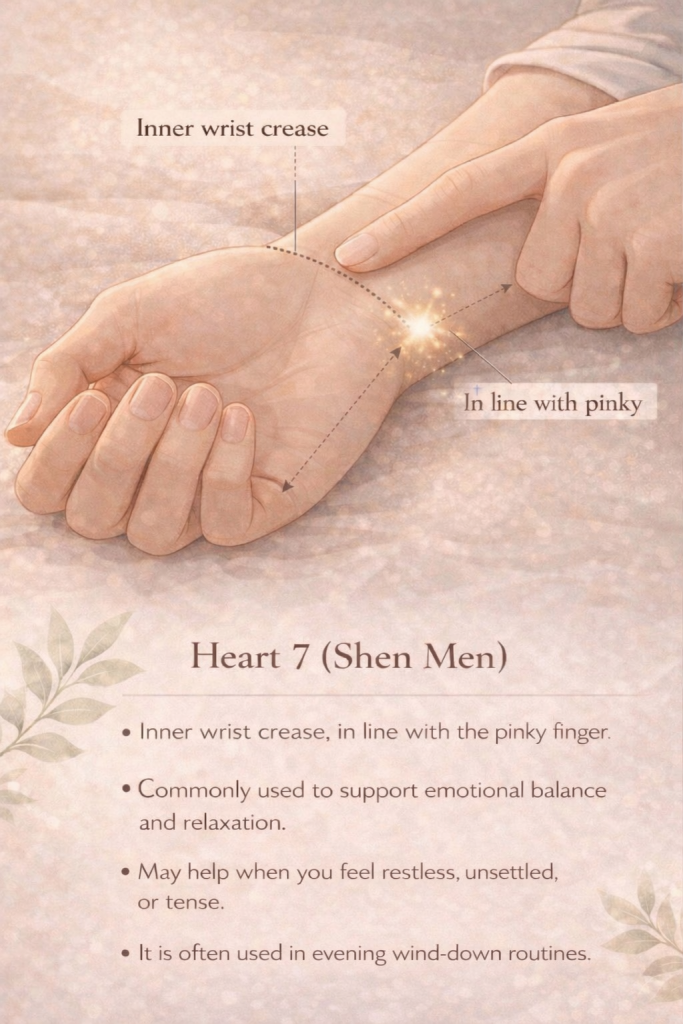
Heart 7 (Shen Men)
Inner wrist crease, in line with the pinky finger. Commonly used to support emotional balance and relaxation. May help when you feel restless, unsettled, or tense. It is often used in evening wind-down routines.
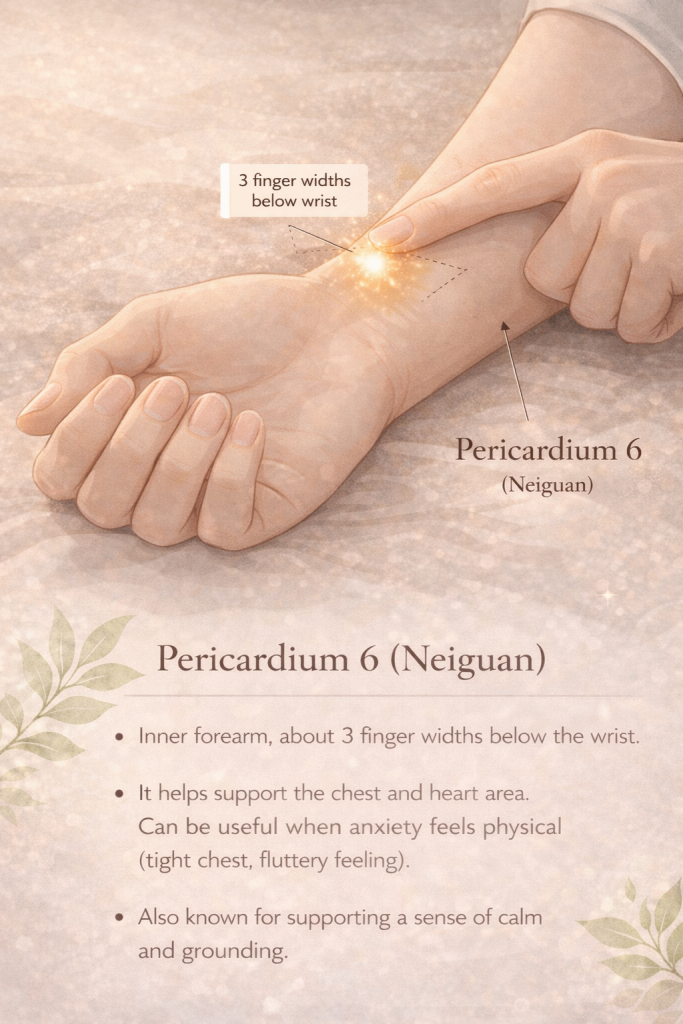
Pericardium 6 (Neiguan)
Inner forearm, about 3 finger widths below the wrist. It helps support the chest and heart area. Can be useful when anxiety feels physical (tight chest, fluttery feeling). Also known for supporting a sense of calm and grounding
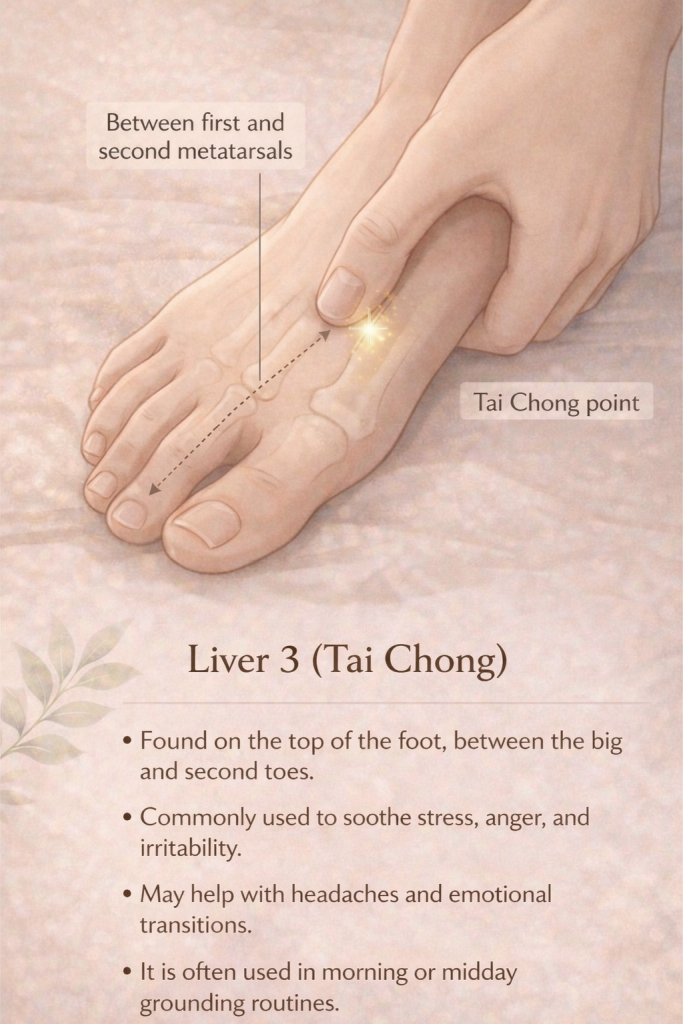
Liver 3 (Tai Chong)
Top of the foot, between the big toe and second toe. Often used when emotions feel stuck, tense, or bottled up. Can help support the smooth flow of energy. A good one for that irritable or overwhelmed feeling.
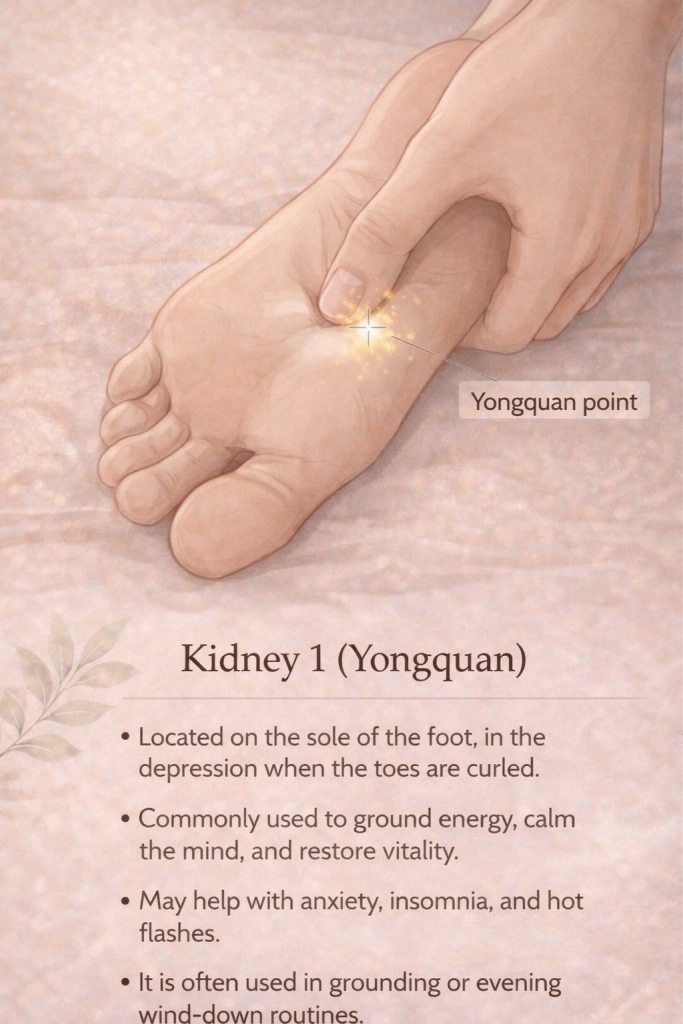
Kidney 1 (Yongquan)
Sole of the foot, about one-third down from the toes. Known as a grounding point. Can help when you feel unsettled, anxious, or “in your head”. Nice to use when you need to feel more anchored.
How to Use Them
You don’t need to use all of these.
Pick 1–2 points that resonate with how you’re feeling, and apply gentle pressure. Breathe slowly and stay there for about a minute. Think of it less as “fixing” something, and more as giving your body a moment to settle.
Simply Salt & Soul
The Salt (The Science): Anxiety is often connected to how the nervous system is functioning. When the body is under ongoing stress, not getting enough rest, or feeling depleted, it can stay in a more alert, reactive state. This can show up as racing thoughts, disrupted sleep, and that “tired but wired” feeling.
Acupuncture has been explored for its ability to support the body in shifting toward a more relaxed, regulated state, helping to balance the “fight or flight” and “rest and digest” responses. Alongside this, consistent nourishment, gentle movement, and supportive daily rhythms can help bring more steadiness over time.
The Soul (The Wellness): In Traditional Chinese Medicine, anxiety is not just something happening in the mind—it’s a reflection of the body’s internal balance.
The Heart, Spleen, and Liver each play a role in how thoughts and emotions are experienced. When these systems feel out of sync, the mind may feel restless, thoughts may loop, or tension may build in the body. From this perspective, anxiety isn’t something to fight—it’s often a signal that the body is asking for support, space, and a return to balance.
Sometimes, the most supportive thing you can do is pause, soften, and begin to listen to what your body has been trying to say all along.