The Sticky Truth About Dampness and Your Health
For a long time, I didn’t really notice it, but once I hit my thirties, I couldn’t quite put my finger on why I felt so sluggish and foggy every late summer. It wasn’t just the heat—it felt heavier than that. It was like I was suddenly moving through water, and even the simplest tasks took twice the effort. It wasn’t until I learned about the concept of Dampness in Traditional Chinese Medicine that everything finally started to make sense to me.
In Traditional Chinese Medicine, health is really all about balance. Our environment and our daily habits can sometimes invite in what are known as the Six Evils. It sounds a bit dramatic, I know, but they’re actually just a way to describe things like Wind, Cold, Fire, and—in my case—Dampness. These are just patterns that influence how we feel day to day, and when one of them gets into the system, it can throw everything off balance.
Dampness is exactly what it sounds like: heavy, sticky, and slow. It can come from a humid climate, but more often than not, we actually create it from the inside out. Think of your Spleen as a transformation station for all the fluids in your body. When that station gets overwhelmed—whether it’s from low energy, not moving enough, or eating too many “damp” foods like rich, greasy, or super sweet treats—those fluids start to build up. It’s like a filter getting clogged, creating an internal “sludge” that makes everything feel twice as hard to do.
As a Yin factor, Dampness is the total opposite of the warmth and movement we get from Yang energy. It’s exactly why you might feel bloated, mentally drained, or just physically “stuck” in your own skin.
Once I finally understood this, I started making small, intentional changes. I cut back on cold, raw foods and those really sweet treats—especially during that humid late-summer transition when the air already feels heavy. Honestly, the difference was night and day. I felt lighter, more energetic, and like I was finally back in my own body again.
When Does Dampness Show Up?
As I mentioned, Dampness is most common in late summer—which is the season connected to the Earth element and its natural moisture—but it can really show up any time of year. If you live in a damp, rainy, or coastal climate, you might notice it more often, too.
Internally, one of the main causes of Dampness is a weakened Spleen (guilty!). In Traditional Chinese Medicine, the Spleen is crucial for fluid metabolism—transforming and transporting nutrients and fluids from food and drink. When your Spleen Qi is weak, those fluids don’t get processed efficiently. Instead of moving through you, they start to pool and accumulate, forming that heavy, “damp” feeling inside the body.
Common Signs of Internal Dampness
- A feeling of heaviness in the body or limbs
- Mental fog or lack of clarity
- Fatigue and low motivation
- Bloating, sluggish digestion, or sticky stools
- Swelling (edema) or water retention
- Cloudy urine, excess vaginal discharge, or phlegmy congestion
- A thick, greasy tongue coating
Foods That Can Help With Dampness
Red bean soup dessert also known as 紅豆沙, is a classic TCM remedy for the Spleen and Kidney. It’s a “functional dessert” that helps move fluids out of the system. I often combine with ingredients like barley or tangerine peels (陳皮). It helps strengthen the “drainage.” In TCM, we say this peel “moves the Qi.” If Dampness is a traffic jam, Tangerine Peel is the police officer getting the cars moving again. It helps clear that “stuffed” feeling in your upper middle. When made with minimal sugar and served warm, this soup is a nourishing ritual that clears away mental heaviness and leaves you feeling centered.
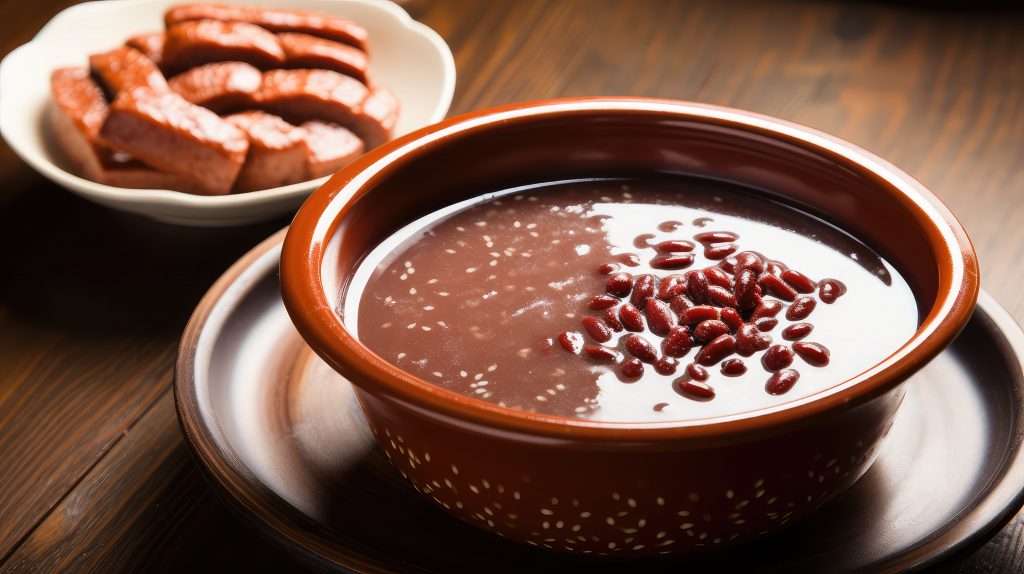
Red bean soup is often used as part of dietary therapy to support the Spleen and Kidney Qi, which play key roles in fluid metabolism and digestion. It’s both nourishing and functional. To enhance its damp-draining properties, I sometimes add ingredients like barley, which strengthens the soup’s ability to gently remove excess fluids. A bit of dried tangerine peel (陳皮) adds warmth and helps move Qi, improving circulation and digestion while also helping to clear phlegm and dampness from the upper abdominal area.
When made with minimal sugar and served warm, this soup becomes a wonderful, nourishing way to help the body stay light and balanced—especially during humid weather or when digestion feels sluggish.
Other Foods That Help Clear Dampness
If you’re looking to reduce internal Dampness through diet, here are some supportive foods and herbs:
- Job’s Tears (coix seed / 薏米) – a traditional Damp-draining grain
- Mung beans – slightly cooling and great for detox (use only when Heat is present) otherwise, if you have a “Cold-Damp” constitution (feeling cold and sluggish), Mung beans might be too chilly for your Spleen
- Pumpkin, lentils, and adzuki beans – Spleen-supportive
- Spices like ginger, cardamom, and cinnamon – warm and activate Qi (act like a heater for your Stomach, helping to “dry out” the dampness)
- Dandelion greens or radish – mildly bitter foods that help drain excess fluids. Just be sure to sauté them with a little ginger to keep them from being too cold!
- Root and Starchy Vegetables: Carrots, sweet potatoes, yams, parsnips, pumpkin, turnips, and radishes (including daikon) are recommended, particularly when cooked
- Leafy Greens and Fibrous Vegetables: Kale, mustard greens, dandelion greens, spinach, celery, asparagus, watercress, cabbage, and kohlrabi support digestion and help clear dampness (spinach can be slightly damp-producing because it is moist and cooling, so cook them with ginger to balance it out)
- Herbal Teas: Ginger tea, green tea, oolong, jasmine, chrysanthemum, cardamom, fennel, peppermint, and lotus leaf teas are traditionally used to manage dampness
Lifestyle Tips to Reduce Dampness
Food is just one piece of the puzzle. Here are a few habits that also support Dampness relief:
- Move regularly to support Qi and fluid circulation. You don’t need a heavy workout; even a 15-minute walk “wakes up” the Spleen and gets fluids moving.
- Avoid overeating or late-night snacking, which burdens the Spleen
- Protect yourself from damp environments – Avoid sitting on damp grass or walking barefoot on cold tiles. Dampness can enter from the ground up!
- Choose warm, cooked meals instead of raw or cold foods
- Your “digestive fire” is strongest in the middle of the day. Avoid heavy, damp meals (like big bowls of pasta or ice cream) late at night when the Spleen is trying to rest.
- Reduce overthinking or worry, which in TCM weakens the Spleen. TCM teaches that “Overthinking” knots the Qi and weakens the Spleen. Sometimes the best way to clear dampness is to stop over-analyzing and just be.
Simply Salt & Soul
The Salt (The Science): “Dampness” often correlates with what we recognize as systemic inflammation or lymphatic congestion. From a nutritional perspective, the “damp” foods we avoid (refined sugars and dairy) are highly mucus-forming and pro-inflammatory. By swapping cold, raw salads for warm, cooked starches like pumpkin or yam, you’re giving your digestive enzymes a head start, making it much easier for your body to break down nutrients without the “sludge.”
The Soul (The Wellness): Dampness is essentially energy that has stopped moving; it’s life that has become stagnant. In holistic wellness, we believe that when we hold onto old emotions or stay stuck in “survival mode,” our bodies can mirror that stagnation. Releasing dampness is a beautiful metaphor for letting go. Whether it’s through a warming meal or a good cry, allowing things to “flow” again is an act of deep self-care. You aren’t just clearing your system; you’re making space for new energy to arrive.
This article highlights an often overlooked health issue. It makes me think more about how indoor dampness could be affecting my well-being and what steps I should take to prevent it.
Thank you so much 🤍 I’m really glad it resonated with you. Dampness can be so subtle, but over time it can influence how we feel more than we realize. Sometimes it’s the small shifts in our environment and daily habits that make the biggest difference.